
Many businesses think that a website is just a way to build a web presence; a way to get themselves online. But that’s just one part of what a great site is all about. A website doesn’t just promote your brand in the digital space. When done right, it can guide your visitors right through the funnel.
But to achieve that, we need to view websites in a different way – not as a group of distinct pages all sitting together under a single domain. We need to see them as a collection of interconnected ideas that take the visitor on a journey, right through from awareness to consideration, decision, and advocacy.
This is something that needs to be factored in right from the start of the design phase. By thinking about the user journey early on, you can ensure you’re creating a seamless online experience for users, rather than a disjointed one. And you can do this by using wireframes in the design process.
What are wireframes?
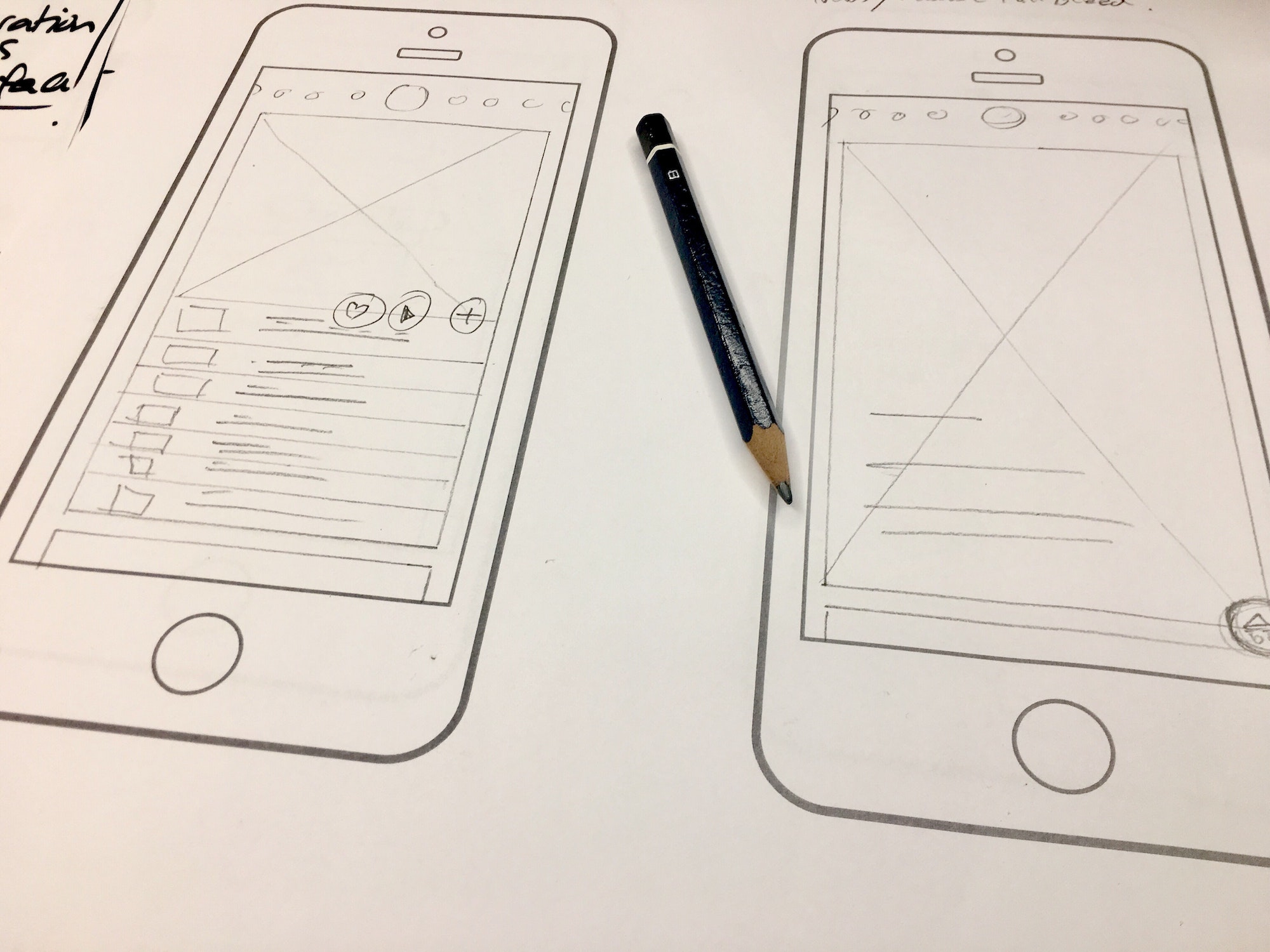
A wireframe is essentially a blueprint of your website, mapping out where everything’s going to go.
By this stage in the design process, you should already have a good idea about what you want your site to achieve, the content you want to include, and how you want to incorporate your branding into the design. But even with these things all figured out, there’s still pretty much an unlimited number of ways that you can put all these elements together. You’ve got the ingredients, but no recipe.
A wireframe is your recipe.
Ultimately, a wireframe is a way to create a structure for your site. It makes it easier to organise your content on individual pages, and also to organise your navigation and links to pull the right pages together. This can help to create a logical path for a positive, seamless user journey.
Why use wireframes?
The first step in designing a website is to set a goal. And this is where that goal comes into play. What do you want your visitors to do when they’re on your website? How do you want them to interact? What actions do you want them to take? It’s important that your website provides a user experience that guides each visitor towards that goal. That’s how your website is going to bring the most value.
If your primary goal is to sell a service, ask yourself if your website structure makes it easy for visitors to…
- Become aware of the service
- Understand why they need that service
- Evaluate that service
- Take the first steps towards signing up for that service
Does the structure allow visitors to move through your site in this way?
That’s a question a wireframe can answer. It’s a way for you to visualise your UX, understand how different structures can guide visitors in different directions, and build a blueprint for success.
When to use wireframes
Wireframes should be one of the first things you do after setting your goal, building your brand, and planning your content. Yet it’s something that a lot of businesses often leave until later. That’s because ‘wireframe’ and ‘visual design’ are often thought of as being much the same thing – and it’s natural at this stage in the process to feel it’s a little too early to be thinking about making things look pretty.
But a wireframe isn’t about finalising any design elements. It’s simply about creating a base upon which you can build. Wireframes are so quick to whip up, easy to adapt, and don’t involve in-depth design work, so don’t be afraid to use them! They’re key to creating a structure that works.


